

An outdoor dining table can look like the right size until the chairs are placed around it. Once people sit down, the setting may block the back door, crowd the barbecue area or leave very little room for anyone to walk past.
The shape of the table can make a big difference.
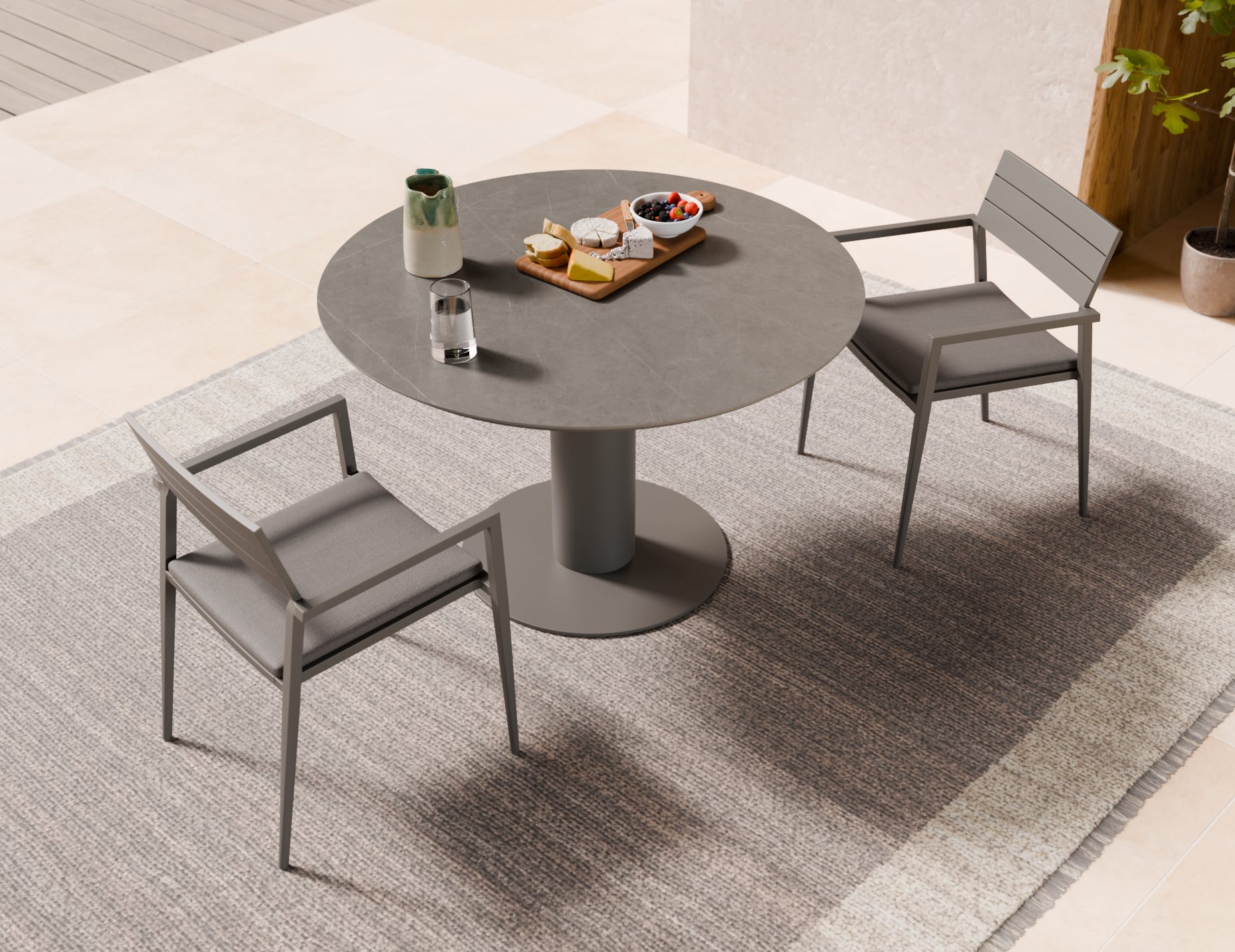
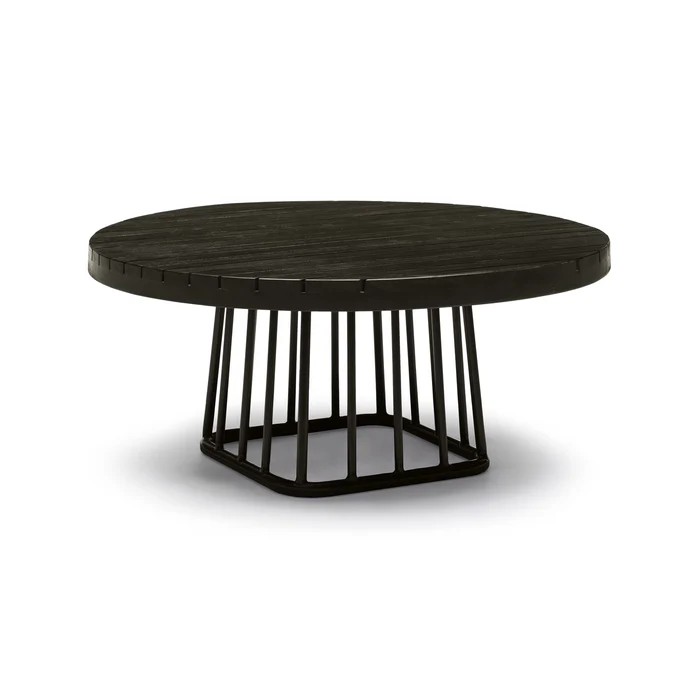
A round outdoor table usually creates a close and relaxed dining space. It can work beautifully in a square courtyard or an open patio where people approach from different directions.
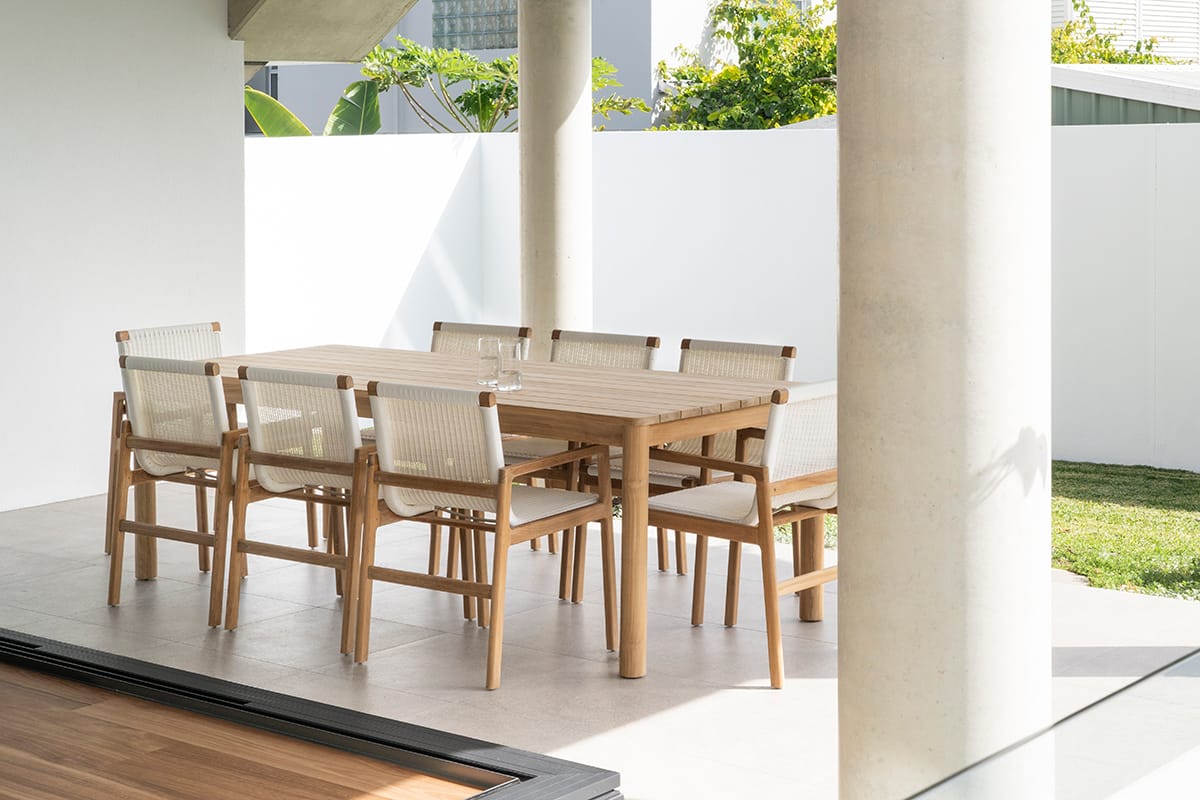
A rectangular outdoor table uses more length but less width. This often makes it a better match for a long deck, a narrow balcony or a covered alfresco area beside an outdoor kitchen.
The choice between a round vs rectangular outdoor table should not be based only on appearance. The best shape is the one that gives everyone enough room to sit, eat, talk and move around comfortably.

Why Does Outdoor Table Shape Matter?
Outdoor dining areas are rarely empty spaces.
A typical Australian patio may include:
- A sliding door
- A barbecue
- An outdoor kitchen
- Pergola posts
- Garden steps
- A path to the pool
- An outdoor lounge
- Pots and garden beds
The dining table must share the area with all these features.
A round table spreads evenly in every direction. It can sit naturally in the centre of a square or open space.
A rectangular table follows a straight line. It may sit along the length of a deck, parallel to an outdoor kitchen or closer to one side of a balcony.
The chairs also need space. Interior-design guidance generally recommends around 91 centimetres between the table and nearby walls or furniture. Around 61 centimetres of table edge should also be allowed for each diner so people are not sitting shoulder to shoulder.
These measurements provide a useful starting point, but every outdoor setting is different. Wide armchairs need more room than slim dining chairs. A busy walkway may also require more space than a quiet side of the table.

Comparison: Round or Rectangular?
A round table usually works best when:
- Two to six people use the table regularly
- The outdoor area is square or open
- Conversation is an important part of the meal
- Several paths run around the table
- A softer and more casual appearance is preferred
A rectangular table usually works best when:
- Six or more people need regular seating
- The outdoor area is long or narrow
- Large meals are often served
- Benches or extra end chairs are useful
- The table needs to follow a deck, wall or outdoor kitchen
- An extension table is preferred
These are not strict rules. A compact rectangular table may suit a small balcony, while a large round table may become the centre of a spacious garden.
The shape of the usable area is more important than its total size.

What Are the Benefits of a Round Outdoor Table?
A round table brings every chair towards the same centre. No one sits at the head of the table, and there is no far end that feels separate from the group.
This simple shape changes the way the setting feels.
It Makes Conversation Easier
Everyone around a round table can usually see one another without turning too far.
Imagine a family of four having breakfast outside. Each person faces the centre, so the conversation can move easily between everyone at the table.
The same feeling works well during drinks with friends or a relaxed weekend meal. One person can speak to the group without someone at the opposite end feeling left out.
Design publications often describe round tables as warm, welcoming and conversation-friendly because they remove the formal head position and draw people towards one shared centre.
This advantage is strongest with smaller round tables. When the diameter becomes very large, the people sitting opposite one another are still far apart.
It Has No Corners in the Walking Path
A rectangular corner can project into a walkway even when the rest of the table fits comfortably.
This may cause problems near:
- A sliding door
- Pool access
- Outdoor steps
- A narrow garden path
- The entrance to an outdoor kitchen
- A frequently used back door
A round table removes those projecting corners.
People can follow a smoother path around the setting, which is useful when several parts of the outdoor area need to remain connected.
The table may also feel more comfortable in a family space where children regularly move between the house, lawn and patio.
It Works Well in Square Courtyards
A round table often feels balanced in a square outdoor area.
The distance between the table and the surrounding walls remains similar on each side. Guests can approach the setting from several directions instead of following one main route.
The curved edge can also make a paved courtyard feel softer. Outdoor areas often contain many straight lines from walls, fences, pavers and deck boards. A circular table breaks up those lines and adds a more relaxed shape. Designers also use curved tables to soften spaces filled with straight cabinetry, walls and other angular features.
A Pedestal Can Make Chair Placement Easier
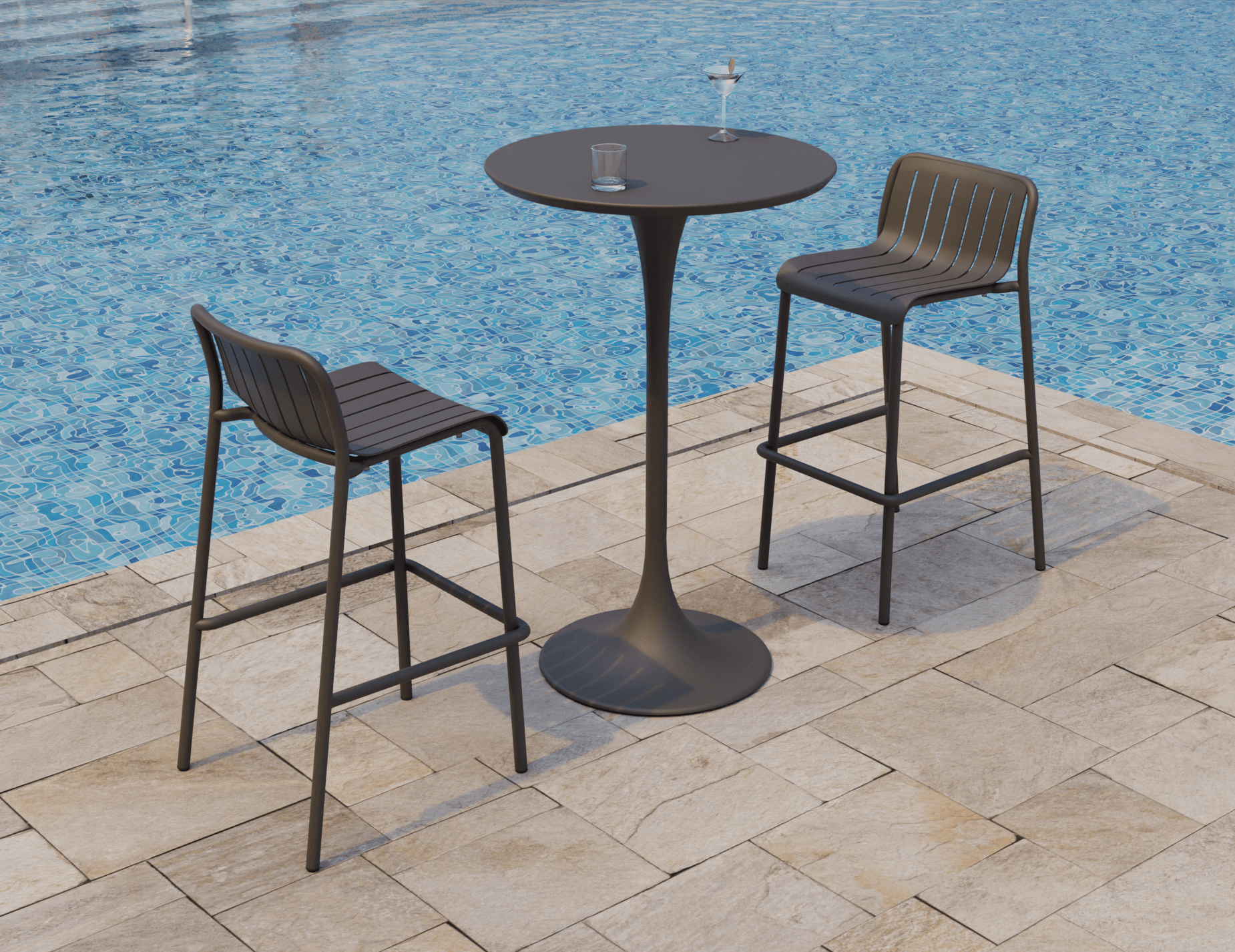
Many round tables use a central pedestal instead of four separate legs.
This can make the seating more flexible because chairs are not competing with legs around the edge. One chair can be moved slightly to the left or right without immediately hitting a corner support.
A pedestal may also make it easier to add an occasional chair.
However, the base still needs to be checked. A wide pedestal can reduce foot space, while a small base may not provide the stability needed in an exposed outdoor area.
The table should be judged from underneath as well as from above.

What Are the Limitations of a Round Outdoor Table?
A round table can create a friendly setting, but it is not the best choice for every outdoor area.
It Needs Width in Every Direction
A round table uses the same amount of width and length.
A table with a diameter of 150 centimetres needs 150 centimetres across both directions before any space is added for chairs.
Allow approximately 90 centimetres around the edge, and the complete dining zone becomes about 330 by 330 centimetres.
This can work well in a square courtyard. It may not work in a patio that is only 280 or 300 centimetres wide.
A rectangular table with similar seating capacity could use more length but considerably less width.
This is why a round table does not automatically suit every small space.
The Centre Becomes Harder to Reach
The centre of a small round table is easy to reach.
The problem appears as the diameter grows.
The middle of a 150-centimetre round table is 75 centimetres from every edge. On a 180-centimetre round table, the centre is 90 centimetres away.
Guests may need to lean forward to reach:
- A salad bowl
- Barbecue platters
- Drinks
- Condiments
- Bread
- A flower arrangement
A lazy Susan can make shared dishes easier to reach, but it also occupies part of the tabletop.
An umbrella pole through the centre can reduce the available serving area even further.
Large Groups Need a Large Diameter
A round table may feel comfortable for four or six people, but every extra diner increases the required circumference.
A wider table then pushes the opposite guests further away and makes the centre harder to use. Design guidance also warns that oversized round tables can reduce both conversation comfort and practical reach.
For eight or ten regular diners, a rectangular table is often easier to position.
Extra Chairs Can Feel Crowded
A rectangular table has clear end positions where an occasional chair may fit.
A round table has no ends. An extra chair must be squeezed into the circle, which reduces the space available to everyone else.
This may work for a child or a short meal, but it can feel uncomfortable when the table already has wide outdoor armchairs around it.

What Are the Benefits of a Rectangular Outdoor Table?
A rectangular table is a familiar choice for outdoor dining because it suits many common Australian patio layouts.
The shape works particularly well for long spaces, larger families and regular entertaining.
It Follows Long and Narrow Areas
Many decks, balconies and covered alfresco areas are longer than they are wide.
A rectangular table can follow the same direction.
The table may sit:
- Along the deck boards
- Parallel to a railing
- Beside an outdoor kitchen
- Under a long pergola
- Near a straight wall
- Between two support posts
This arrangement can leave one side open as the main walkway.
A round table cannot follow the edge of a narrow area in the same way. Part of the circular top projects towards the centre, while the spaces beside the curve may remain unused.
It Usually Seats More People
A rectangular table provides two long sides and two ends.
This makes the seating arrangement easy to understand. Chairs can be placed along the sides, while one chair may sit at each end.
An occasional guest can sometimes be added without changing every other seat.
The shape also works with different chair combinations:
- Individual chairs on every side
- A bench on one long side
- Benches on both sides
- Armchairs at the ends
- Slim chairs along the sides
- A mixture of adult and children’s seating
Rectangular tables are generally more practical for larger gatherings because their length can increase without requiring the same amount of extra width.
It provides a useful serving space
A rectangular table has a long central area.
Serving dishes can be placed in a line rather than grouped around one point. Meat may sit at one end, salads in the centre and drinks at the other.
This can make a shared barbecue meal easier to organise.
A table that is 90 centimetres wide places the centre only 45 centimetres from each long edge. Most diners can reach shared dishes without leaning too far.
The long surface can also hold:
- Serving boards
- Ice buckets
- Table decorations
- Condiments
- Water jugs
- Extra plates and glasses
This is helpful for families who enjoy long lunches or frequently invite guests.
Bench Seating Fits Naturally
A straight bench pairs easily with a rectangular table.
The bench may slide underneath when it is not required, which can make the outdoor area look less crowded. It can also give children more flexible seating during family gatherings.
A bench can work especially well:
- Against a wall
- Along a deck railing
- On the quieter side of the table
- Where a permanent walkway is not needed
However, benches are not perfect for everyone. The person in the middle may need others to move before leaving, and some guests may prefer the support of a chair with a back and arms.
A combination of one bench and several individual chairs can offer a useful balance.
Extension Tables Suit Changing Guest Numbers
A household may use only four seats most days but need eight seats during family visits.
An extendable rectangular table can stay smaller during the week and open when more people arrive. This protects everyday walking space without removing the option to host a larger meal.
A permanent eight-seat table may feel unnecessary when only two or four people use it regularly.
The best table should suit everyday life first and occasional events second.

What Are the Limitations of a Rectangular Outdoor Table?
A rectangular table provides more seating, but the shape can cause problems when the available area is compact or irregular.
Corners Can Block Movement
A table corner may sit directly in the route between the house and the barbecue.
The setting may seem fine while the chairs are pushed in. Once a guest pulls out a chair near the corner, the remaining walkway may disappear.
This is why the position of doors and paths matters.
Design guidance recommends around 91 centimetres of clearance near ordinary seating areas and more room where people regularly pass behind occupied chairs.
A quieter side of the table may need less walking space. For example, a bench placed near a wall does not require a pathway behind it if no one needs to pass there.
A Long Table Can Divide the Conversation
People usually speak most easily with the guest beside them or directly opposite them.
At a long table, someone sitting at one end may not be part of a conversation at the other end. Several smaller conversations may happen at once.
This can work well during a large party. It may feel less connected during a small family meal.
A table that is much larger than the household needs can also make everyday dining feel spread out.
The Legs Can Block Seats
A tabletop may appear large enough for six chairs, but the base can reduce the real capacity.
Problems may come from:
- Wide trestle legs
- Legs positioned far from the corners
- Low support bars
- A thick frame below the tabletop
- A brace across the centre
An end chair may have nowhere to go if the table legs sit too far inward.
Each diner generally needs about 61 centimetres of edge space, but the clear space between the supports must also be measured.
The advertised seating number should therefore be treated as a guide rather than a guarantee.
Which Table Shape Takes Up Less Space?
Neither shape always wins.
A round table uses less length than a long rectangular table, but it needs more width. A rectangular table needs more length, but it can fit into a narrower zone.
Consider two tables that may seat around six people:
- Round table: 150 centimetres in diameter
- Rectangular table: 180 by 90 centimetres
With around 90 centimetres of clearance on every side, the round setting needs an area of approximately:
330 × 330 centimetres
The rectangular setting needs approximately:
360 × 270 centimetres
The rectangular table requires about 30 centimetres more length.
The round table requires about 60 centimetres more width.
This example explains why the room shape matters so much.
A square courtyard measuring 350 by 350 centimetres may suit the round table beautifully.
A covered alfresco area measuring 400 by 300 centimetres may suit the rectangular table more comfortably.
The round table may still feel easier to walk around because it has no corners. However, it does not necessarily require less width.
Measure the Complete Dining Zone
The tabletop measurement is only the beginning.
The complete setting includes:
- The table
- Chairs
- Space to pull the chairs out
- Room for people to sit
- Walking paths
- Nearby doors
- Access to the barbecue or outdoor kitchen
Mark the table dimensions on the ground with masking tape before buying.
Place the existing chairs around the marked shape, or mark their approximate positions as well. Pull a chair back and walk through the space as you normally would.
Try the route:
- From the kitchen to the table
- From the table to the barbecue
- From the house to the garden
- From the deck to the pool
- Around each occupied chair
This simple test often reveals problems that are not clear from measurements alone.

Which Shape Is Better for Conversation?
A round table usually creates one shared conversation.
Every diner faces the centre, and no one has a formal head position. This makes the setting feel friendly and equal, especially with four to six people.
A rectangular table supports smaller conversations.
Guests may speak with the people beside or opposite them rather than addressing the full table. This can feel lively during a larger meal because several discussions can happen at the same time.
The better choice depends on the type of gathering.
A round table may suit:
- Drinks with close friends
- Family games
- Breakfast for four
- A relaxed afternoon meal
- Smaller shared conversations
A rectangular table may suit:
- Large family lunches
- Barbecues
- Birthday meals
- Long weekend gatherings
- Events where several groups are talking
Neither style of conversation is better in every situation.
Which Shape Is Better for Serving Food?
A small round table makes shared food easy to reach because every diner sits close to the middle.
A large round table creates more distance. The central dishes may sit 75 to 90 centimetres away from the table edge.
A rectangular table keeps the centre closer to the guests seated along its long sides. The food can also be spread across the length instead of being placed in one group.
A rectangular table may therefore work better when the surface regularly holds:
- Large barbecue platters
- Several salads
- Shared side dishes
- Drinks
- Plates for different courses
- Decorative items
A round table may be enough when meals are served directly onto each person’s plate or when only a few shared dishes sit in the centre.
How Do Chair Size and Table Bases Affect the Choice?
Chair width can change the number of people who fit around any table.
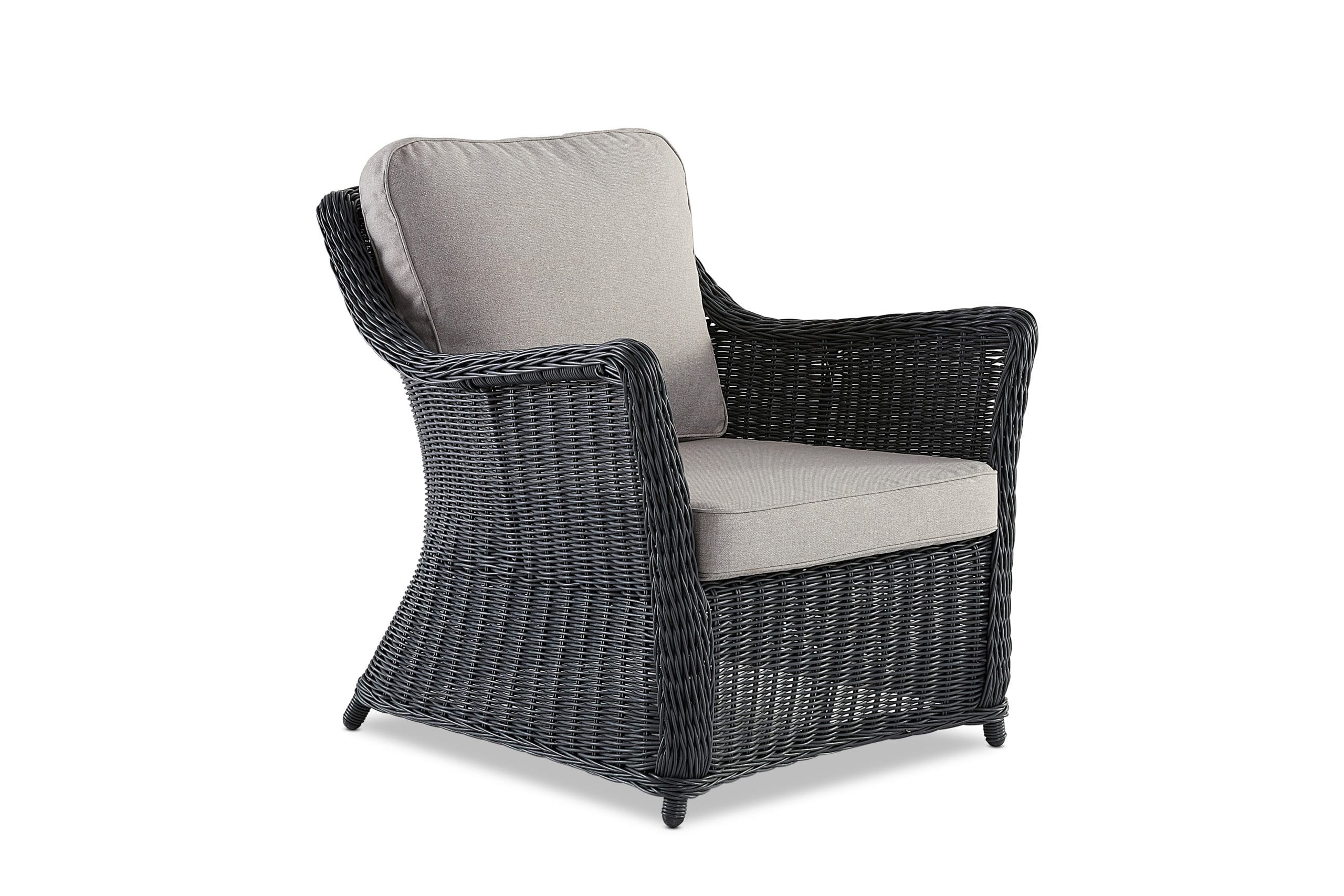
A slim armless chair may need around 60 centimetres of edge space. A wide woven armchair with thick cushions may need considerably more.
The chairs should not touch one another when people are seated. Guests also need room to move their arms without bumping the person beside them.
Check whether:
- The arms fit below the tabletop
- The chair slides between the table legs
- The back projects far into the walkway
- The cushions make the chair wider
- The chair can be pulled out without hitting a wall
The base is equally important.
A central pedestal may improve seating flexibility around a round table, but it can take up foot space.
Corner legs may work well on a rectangular table when they sit close to the ends. Wide trestles may reduce the clear seating area.
The real capacity depends on the table and chairs together.
How Does the Table Shape Affect Shade?
Shade should be considered at the same time as the table.
A round table often pairs naturally with a round market umbrella placed through the centre. The canopy follows the table shape and can provide balanced coverage around the edge.
A rectangular table is more difficult to cover with a small round umbrella. The centre may remain shaded while the diners at both ends sit in direct sun.
A long setting may work better with:
- A rectangular umbrella
- A cantilever umbrella
- A pergola
- A roofed alfresco area
- A shade sail
- More than one shade point
A cantilever umbrella places the support to one side, which keeps the middle of the table free and allows the shade to be adjusted over a larger setting.
Shade is especially important in Australia. The Bureau of Meteorology and Cancer Council Australia advise people to seek natural, built or portable shade when UV protection is required. They also note that shade should be used with other forms of sun protection because reflected UV can still reach people near water, concrete and other surfaces.
Before choosing a table, watch how the sunlight moves across the outdoor area during the hours when meals usually take place.
A table may sit in shade during the morning but receive full western sun at dinner time.

Which Table Shape Works Best in Different Outdoor Areas?
Small Square Courtyard
A round table is usually the stronger choice.
The shape can sit in the centre without sending corners towards the surrounding paths. It also creates a relaxed gathering point for two to six people.
A round pedestal table may provide additional flexibility when the courtyard is compact.
Narrow Apartment Balcony
A slim rectangular table usually works better.
The table can follow the balcony length and sit closer to one side. This may leave a clearer route between the door and the far end.
A folding or extendable design can help when the dining area is not used every day.
A small round bistro table may still suit two people, but a larger round table can quickly use too much balcony width.
Long Timber Deck
A rectangular table often follows the deck naturally.
Its long sides can run in the same direction as the boards, while a walking path remains beside the setting.
A bench may sit along the quieter side or close to the railing.
Covered Alfresco Area
Either shape can work.
The decision depends on:
- The position of the outdoor kitchen
- Sliding doors
- Pergola posts
- Ceiling fans
- Lighting
- Steps
- Main walking paths
- The regular number of diners
A rectangular table may follow the outdoor kitchen, while a round table may suit an open corner used for smaller meals.
Poolside Dining Area
A round table can reduce projecting corners near a busy path.
However, the pulled-out chairs must remain clear of the route around the pool.
Shade also needs careful planning because UV can reflect from water even when the table sits under an umbrella.
Open Garden Setting
Both shapes can work well.
A round table can become an intimate centre point under a tree or pergola.
A long rectangular table may suit larger lunches, birthday gatherings and shared barbecue meals.
The surrounding garden usually provides more freedom, so the regular guest number may become the main deciding factor.
How to Make the Final Choice
Ask these questions before choosing your outdoor table:
- How many people use the table most weeks?
- Is the available area square, wide, long or narrow?
- Where do people normally walk?
- Will pulled-out chairs block a door or path?
- Do you regularly serve large shared meals?
- Will benches or extra end chairs be useful?
- Does the table base interfere with any seats?
- What type of shade covers the setting?
- Will the table remain outdoors throughout the year?
- Are occasional guests influencing the choice too much?
Choose for everyday life first.
A family of four does not always need a permanent table for ten. An extension table, additional folding chairs or a separate occasional table may handle larger events without taking away everyday space.
Final Thoughts
A round outdoor table works best when the setting needs to feel close, relaxed and easy to move around. It can sit naturally in a square courtyard, open patio or garden area used by a smaller group.
A rectangular outdoor table works best when the area is long or narrow, more people need regular seating or large meals are served. It also offers more options for benches, extension leaves and occasional end chairs.
The final decision should not depend on shape alone. Measure the full dining area after the chairs are pulled out, check the main walking paths and look underneath the table to see where the legs or pedestal sit.
Outdoor Furniture Co. offers outdoor tables, dining chairs and complete outdoor settings through its online store, with delivery available across Australia. Explore the range to find a table shape and size that suits your patio, deck, balcony or alfresco area.
Common Questions About Round and Rectangular Outdoor Tables
1. Does a round outdoor table take up less space?
A round table does not always use less space. It has no corners, so movement around it may feel easier. However, the table still needs a similar amount of width and length. A rectangular table may fit better in a long or narrow area because it uses less width.
2. Is a round or rectangular table better for six people?
Either shape can seat six people. A round table creates a closer conversation, while a rectangular table provides more practical serving space and usually fits narrow areas more easily. Chair width and table-leg position should also be checked.
3. What is the best outdoor table shape for a small patio?
A round table often works well on a small square patio. A rectangular table may be better when the patio is narrow or positioned along a wall. The proportions of the available space matter more than the total floor area.
4. How much room should be left around an outdoor table?
Around 90 centimetres between the table edge and nearby walls or furniture is a useful starting point. A busy walkway behind seated guests may need more room. Always test the area with the chairs pulled out.
5. Which table shape works better with an umbrella?
A round table usually pairs easily with a centred round umbrella. A long rectangular table may need a rectangular canopy, cantilever umbrella or fixed shade structure to protect guests sitting at both ends.