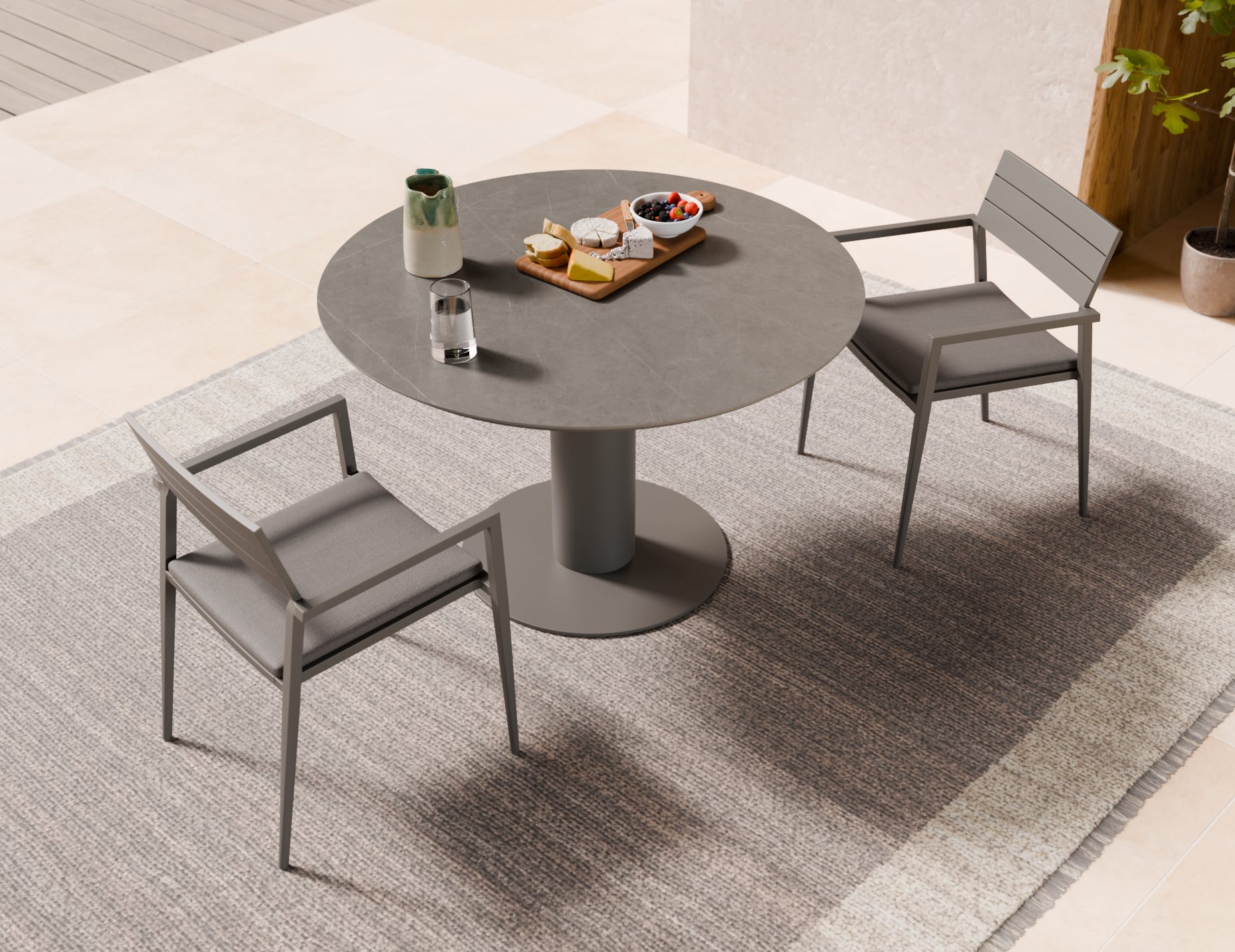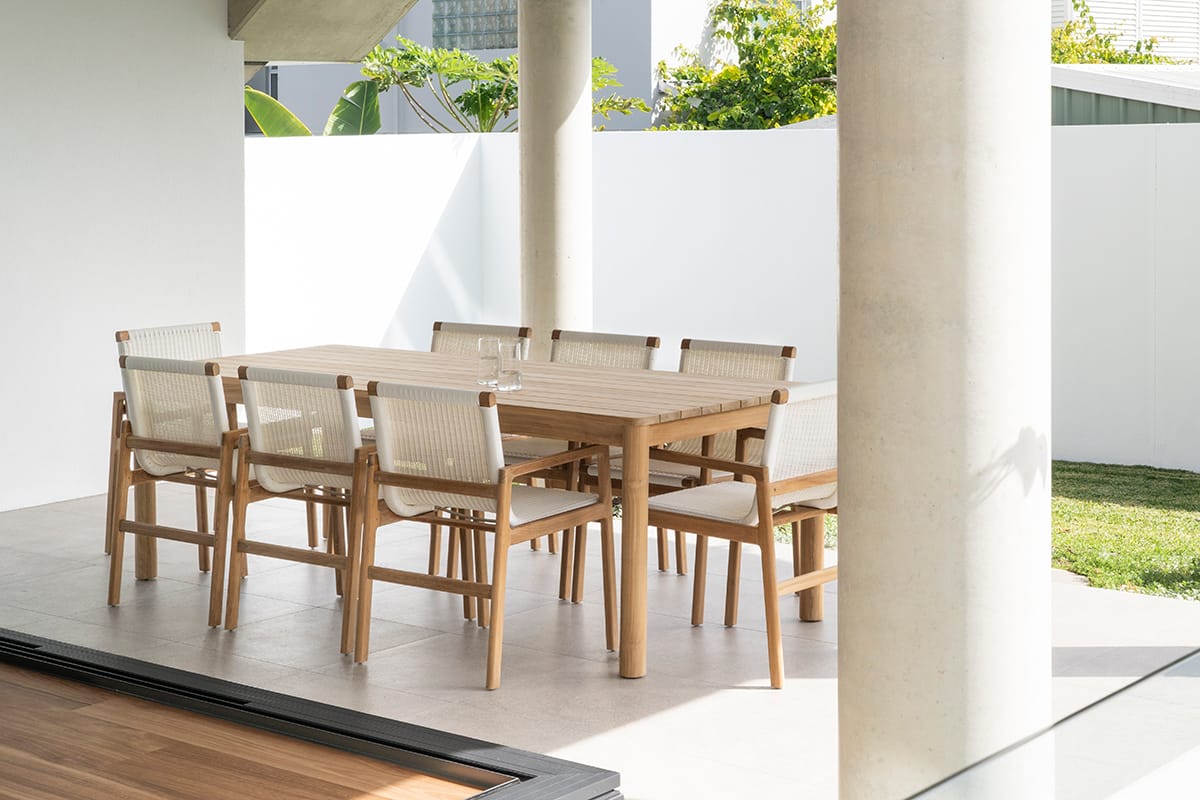


Outdoor living plays a bigger role in Australian homes than it does in many other markets. A balcony, patio, deck, courtyard or alfresco area is often treated like a second living room — somewhere to relax after work, share meals, enjoy a morning coffee or spend weekends with family and friends. Because of that, choosing an outdoor lounge is not simply a styling decision. The size and layout of the furniture shape how comfortable the space feels, how easy it is to move through, and how often it actually gets used. Houzz and Better Homes & Gardens both frame outdoor planning as a function-first decision, not just a decorative one.
The wrong lounge can cause problems very quickly. A setting that is too large can block doors, crowd pathways, and make a usable outdoor area feel cramped. A setting that is too small can leave a broad patio looking disconnected and underdone. The best result usually comes from balancing four things at once: what the space is for, how much usable room you really have, what shape the area takes, and how exposed it is to sun, wind and weather. When those factors are considered together, the furniture starts to feel like part of the architecture rather than something dropped into the space later.

Start With the Main Purpose of Your Outdoor Space
Is the space for everyday relaxing or entertaining?
Before comparing lounge designs, start with the basic job of the space. Some outdoor areas are meant for quiet daily living: a spot to read, have a drink, or unwind at the end of the day. Others are built around entertaining and need to support longer conversations, bigger groups and more flexible seating. Better Homes & Gardens recommends defining how the patio will be used before making layout decisions, because the furniture needs to suit the activity, not just the size of the slab.
A compact two-seater might be perfect for a couple who use the space every evening, but completely wrong for a household that hosts guests most weekends. In the same way, a large corner lounge may look impressive in a product photo while being far too dominant for a courtyard that is mostly used for short casual breaks. Once the real purpose is clear, it becomes much easier to narrow the right format, whether that means a slim sofa, a pair of lounge chairs, an L-shape or a modular setting.
How many people need to use it regularly?
A useful way to think about size is to plan for regular use first and occasional demand second. Many buyers overestimate the amount of seating they need because they imagine the busiest possible day rather than the way the space is used most of the time. In many homes, that leads to oversized settings that reduce flexibility and make the area feel heavier than necessary. Houzz’s guidance on patio sizing and lounging layouts repeatedly points back to proportion and balance rather than maximum seat count.
If two to four people use the area most days, a well-proportioned sofa with one or two additional chairs often performs better than a large fixed sectional. That kind of arrangement keeps the outdoor room feeling open while still allowing extra seating when needed. For households that entertain more often, modular seating, movable ottomans and occasional chairs usually provide a smarter balance between everyday living and weekend hosting.

What activities need to happen in the lounge zone?
The activities that happen in the space matter just as much as headcount. A conversation area needs a different layout from a poolside waiting zone, a reading corner or a compact balcony where people sit briefly before heading back inside. Better Homes & Gardens notes that when people divide a patio by use — for example, relaxing, eating and circulation — the plan becomes more practical and visually coherent.
Think about what needs to happen within reach of the lounge. Do people need somewhere to rest drinks and plates? Is the space mainly for reclining and stretching out? Does it need to keep sightlines open toward a garden or pool? Is it a place where children are supervised, or where guests gather around a coffee table? Once those answers are clear, the right seat depth, table size and layout style become much easier to judge.
Measure Your Outdoor Area Properly Before You Shop
Measure the usable space, not just the total patio area
One of the most common mistakes is measuring the full outdoor footprint and assuming all of it can be filled with furniture. In reality, the usable furniture zone is usually smaller than the total patio, balcony or deck. Better Homes & Gardens advises drawing the space first and thinking about movement and activity zones before choosing furniture. That is important because a patio that seems generous at first glance can shrink quickly once circulation space is taken into account.
Measure the actual zone where the lounge can realistically sit. Record the full width and depth of that area, then mentally separate it from the clearance that still needs to stay open. This is the point where many buying mistakes can be avoided, because the decision stops being visual guesswork and becomes a question of real proportions.
Account for fixed obstacles
It is also important to measure around anything that cannot move. Sliding doors, stairs, balustrades, support posts, built-in benches, privacy screens, planters, barbecue areas and outdoor kitchens all affect where a lounge can sit and how people will move through the area. A lounge may technically fit the patio’s width and depth while still creating a poor layout because it interrupts the natural path from the house to the yard or from the door to the railing.
Looking at the furniture zone rather than the full patio footprint immediately makes the decision more accurate. It also prevents the common mistake of buying based on an in-store display or showroom scale rather than the actual conditions at home.

Mark the layout before buying
Mocking up the furniture footprint before buying is one of the easiest ways to avoid disappointment. Wayfair recommends using painter’s tape or chalk to mark out the setting, and similar layout planning advice appears across professional patio-planning guides. The reason is simple: once the footprint is visible on the ground, it becomes much easier to judge whether the furniture still leaves enough room for movement and balance.
A lounge that looks compact in a product gallery can feel much larger when its full depth, arms, return and coffee table are laid out on the floor. Marking the shape first helps reveal those hidden bulk issues before a purchase is made. That is particularly useful with corner lounges and deeper modular settings, which often occupy more room than buyers expect.
Check access and delivery paths
Good measuring does not stop at the patio. GlobeWest’s delivery guidance points out that buyers should also check gates, lifts, hallways, stairs and doorways to make sure the furniture can actually reach the outdoor area. This matters especially in apartments, upper-level homes and properties with narrow side access.
A fixed corner lounge may suit the patio beautifully but still be difficult to deliver if turning circles are tight. A modular setting is often easier because it arrives in smaller pieces. Measuring the delivery route at the same time as the final placement area reduces the risk of choosing something that works on paper but becomes a practical problem on arrival.

Understand Standard Outdoor Lounge Dimensions
Typical sizes for common outdoor lounge pieces
Understanding standard size ranges helps buyers judge products more accurately and compare like with like. TheSize notes that outdoor furniture is often bulkier than indoor furniture because weather-resistant construction and thicker cushions add depth and width. According to its guide, outdoor lounge chairs commonly sit around 28 to 32 inches wide and 30 to 36 inches deep, loveseats around 48 to 60 inches wide, and standard outdoor sofas around 72 to 84 inches wide and 32 to 38 inches deep.
In practical terms, that means even a “standard” sofa can have a much stronger presence in an outdoor area than many buyers expect. Extra seat depth improves comfort, but it also pushes farther into the patio. In compact spaces, that added depth can be the difference between an inviting layout and one that feels tight every time someone walks past.
Standard sizes for corner and modular lounges
Corner lounges and modular settings require even more care because their full footprint is harder to judge visually. The Size’s guide shows that small L-shaped sectionals commonly range from about 90 to 120 inches on one side and 60 to 80 inches on the other, while larger U-shaped arrangements can stretch to 120 to 180 inches wide and 80 to 100 inches deep. Individual modules also vary in width, which means the final footprint changes quickly once extra sections are added.
This matters because buyers often focus on how many people the setting can seat rather than how much room it needs around it. A sectional does not just need floor area for the frame. It also needs entry space, clearance around tables and enough breathing room that the patio still feels usable once the arrangement is complete.
Why dimensions matter beyond overall width
Width alone never tells the full story. Depth often matters more in everyday use, especially in balconies and smaller patios. A deep-seat lounge feels relaxed and luxurious, but it reaches much farther into the space. Back height affects how open or bulky the setting feels, especially where views or sightlines matter. Arm width matters too, because very wide arms reduce usable seat space inside the same total width.
That is why it is smarter to compare proportions than seat labels. Two lounges may both be sold as four-seaters, yet one can feel light, efficient and open while the other dominates the whole outdoor area. Looking only at capacity usually leads to poorer choices than comparing the full measurements and overall visual mass.

How furniture bulk changes the feel of a space
The Size also points out that outdoor sofas and sectionals are often deeper and wider because of all-weather cushions and larger-scale construction. That means bulk affects both the measurement and the look of the setting. Pieces with slim arms, lower backs and raised legs usually feel lighter. Pieces with boxed bases, thick arms and very deep cushions generally feel heavier.
Coffee tables and ottomans should be measured the same way rather than treated as afterthoughts. Many outdoor layouts seem fine when buyers look only at the sofa, but once the table is added, the remaining movement space disappears. A good furniture group is not only the lounge itself. It is the combined footprint of every piece that needs to function together.
Match the Lounge Size to Small, Medium, and Large Spaces
Best options for small outdoor spaces
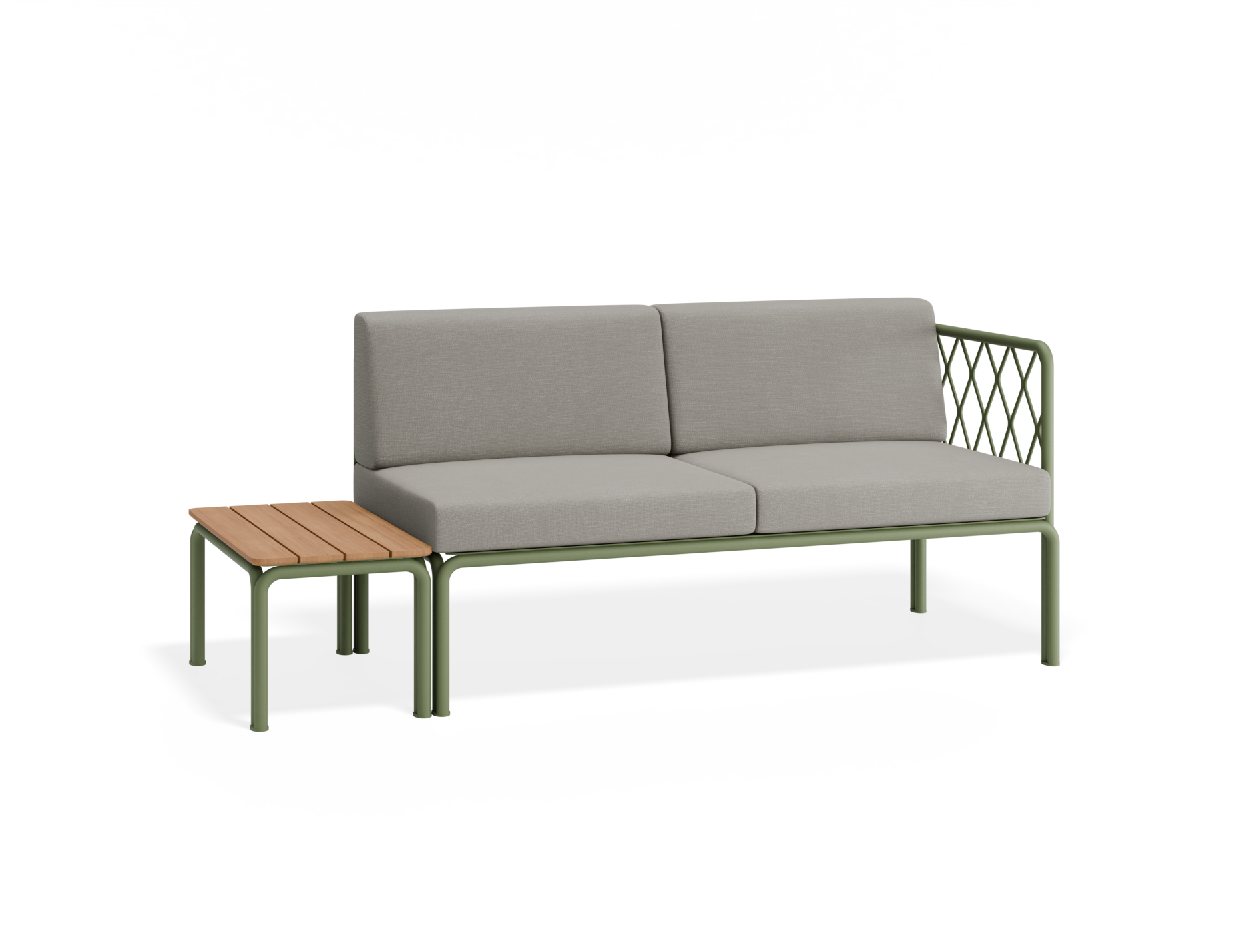
Small balconies, narrow patios and compact courtyards need efficiency more than seat count. Houzz notes that most homeowners cannot change the shape of the patio itself, which means furniture scale and placement become the most important tools for improving the space. In smaller areas, slim two-seaters, bench-style seating or a pair of compact lounge chairs usually work better than deep corner settings that absorb too much floor space.
In these tighter layouts, every detail matters. Slim arms, open-framed pieces and lighter tables help preserve visual breathing room. Small spaces usually look and feel better with slightly less furniture and slightly more openness, because that openness is what makes them usable in daily life.
Best options for medium outdoor spaces
Medium patios and suburban alfresco zones offer more freedom, but proportion is still critical. This is often where a three-seater sofa, a compact L-shape or a sofa paired with one or two lounge chairs creates the strongest result. There is enough space to build a proper outdoor living zone, but not so much room that any large setting will automatically work.
The most successful medium-space layouts usually feel anchored without feeling fixed. There should be enough seating for everyday use, enough clearance for circulation, and enough visual balance that the patio still feels open. This is also the category where buyers most often benefit from mixing a sofa with separate chairs rather than choosing one very large sectional.

Best options for large outdoor spaces
Large patios and broad decks can comfortably handle bigger lounges, modular arrangements and multiple zones. But more space does not automatically mean one giant lounge is the smartest solution. Oversized settings can still look heavy and underplanned if they are used as a shortcut instead of a real layout strategy. Houzz’s patio guidance consistently points back to balance and use rather than size alone.
In larger spaces, zoning often works better than scale by itself. A main lounge can be paired with a dining setting, a smaller conversation cluster, a fire feature or a pair of occasional chairs elsewhere in the garden. Breaking a large area into smaller destinations usually makes it feel more welcoming and more human than filling the footprint with one oversized arrangement.
When separate chairs work better than one large lounge
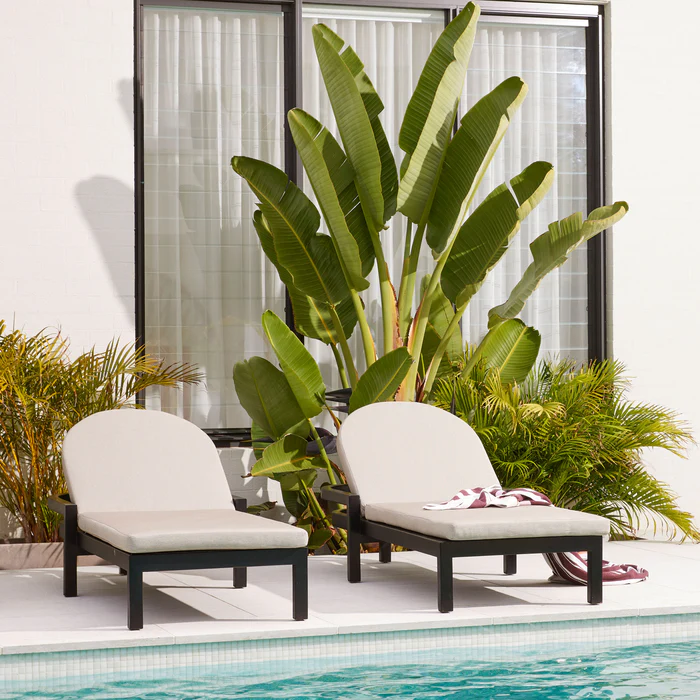
Separate chairs often outperform one large sectional when flexibility matters. They are easier to reposition, easier to deliver, and usually suit awkward footprints better than fixed L-shapes. Layout advice from Patio Productions also supports grouping furniture into functional zones rather than simply letting one oversized piece dominate the floor plan.
A compact sofa with one or two movable chairs often gives medium spaces the best of both worlds. It supports everyday lounging, keeps circulation easier and allows the setting to adapt when guests arrive. That adaptability is a major advantage in real outdoor living, where spaces are rarely used in exactly the same way every day.
Choose the Best Outdoor Lounge Layout for the Shape of Your Space
Linear layouts for long or narrow spaces
The shape of the patio should guide the layout just as much as its overall size. Long balconies and narrow side patios usually work best with a linear arrangement that runs with the space rather than across it. A slim sofa along one wall, or a layout that preserves a clear route from one end to the other, will usually feel more natural than forcing a deep corner setting into a footprint that cannot comfortably support it.
Patio Productions recommends placing the longest piece along the longest edge so the arrangement feels more grounded. In narrow spaces, that advice is especially effective because it works with the architecture instead of fighting it.

L-shaped layouts for square or corner-friendly spaces
L-shaped and corner lounges tend to work best in square or nearly square outdoor rooms where corners can be used efficiently. They help define the lounge zone clearly and can provide strong family seating without needing several separate pieces. That is one reason they are popular in alfresco areas and larger suburban patios.
The key issue is orientation. The return side should support the natural flow of the space rather than obstruct it. A corner placed on the wrong side can block the easiest route to the door, garden, steps or barbecue area and make the entire patio feel awkward. A corner lounge is only a good layout when the corner actually works with the site.
U-shaped or conversation layouts for large entertaining zones
U-shaped layouts and conversation-style groupings are strongest in larger spaces where seating can wrap around a coffee table, fire pit or focal point. These arrangements usually feel more social because people face each other more directly. They also make the patio feel like a real outdoor room rather than a collection of separate pieces.
The downside is that they need room around the outside. If guests have to cut through the middle of the seating zone to reach the house or garden, the layout is working against itself. This kind of arrangement only succeeds when the circulation still flows cleanly around the perimeter.
Modular layouts for flexibility
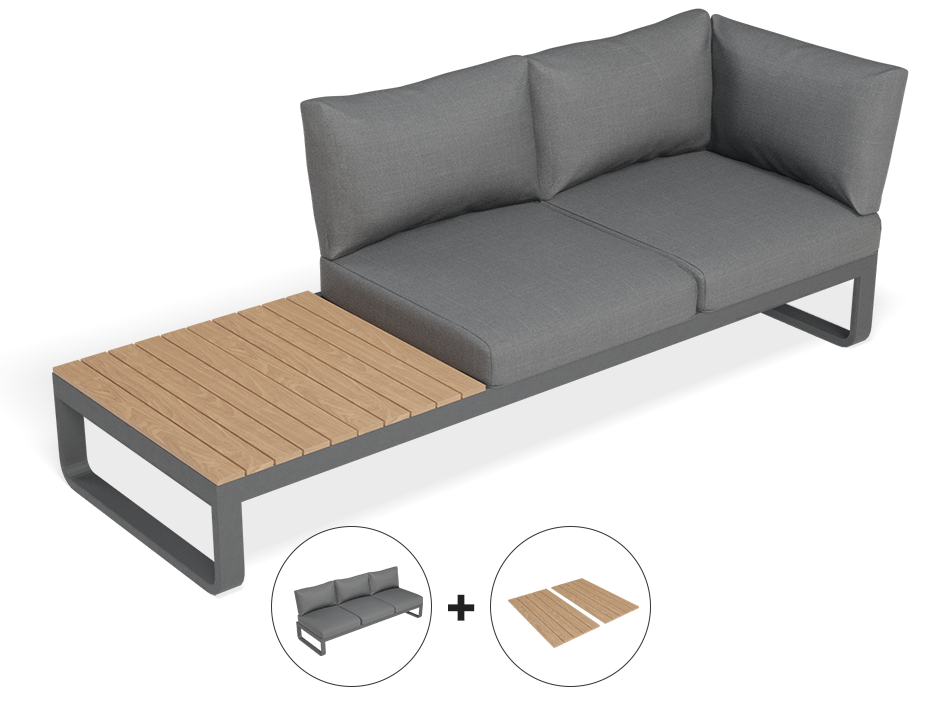
Modular lounges are often the smartest choice for buyers who want flexibility. The Size notes that modular pieces can be configured in different ways, and that mock layout planning is especially useful before ordering them. That adaptability makes modular lounges valuable for households that entertain often, move furniture seasonally or want a setting that can evolve later.
A modular arrangement can start small and expand later, or split into smaller seating groups if the home changes. That makes it more forgiving than a fixed layout, especially for buyers who want long-term value rather than a single rigid setup.

Symmetrical vs relaxed layouts
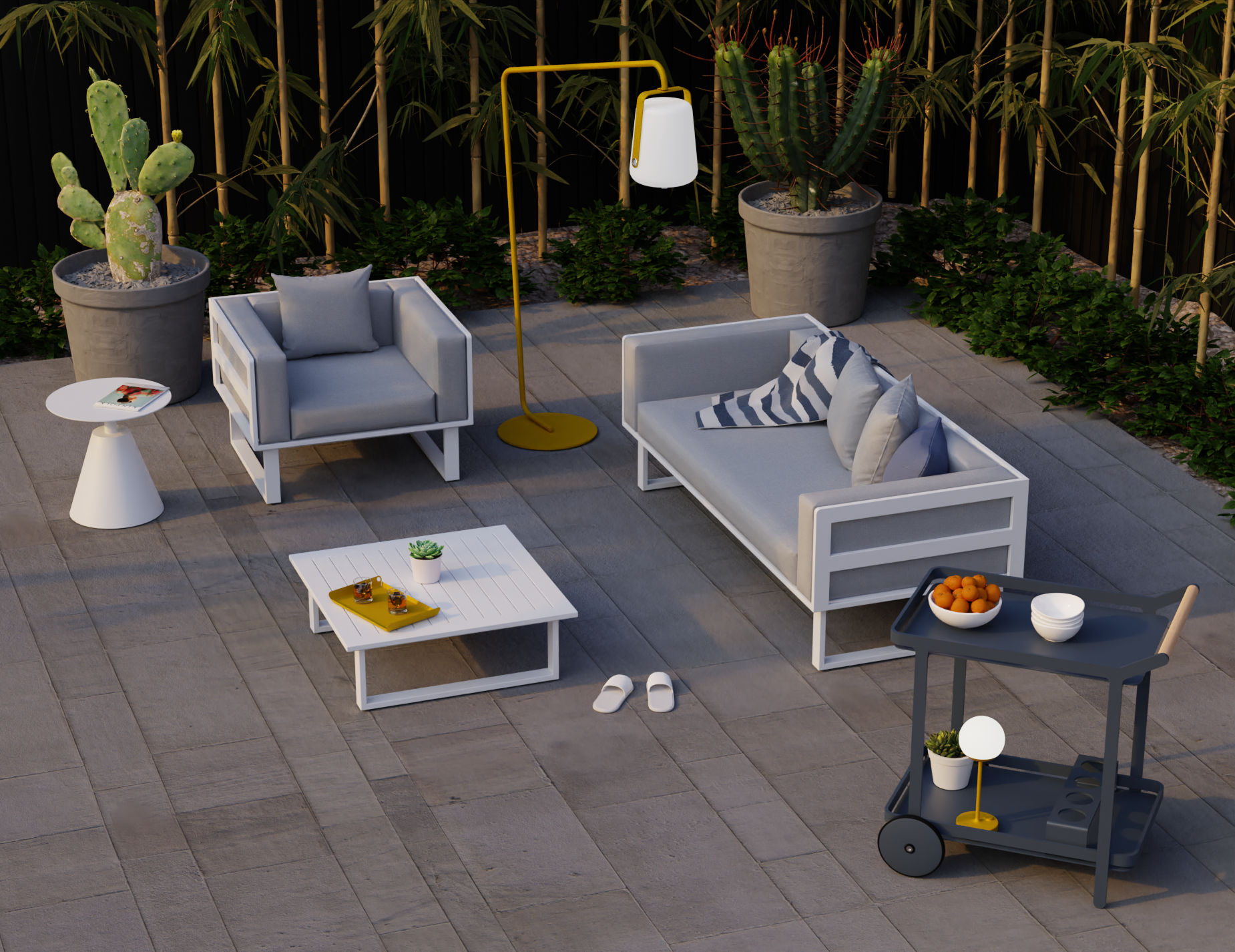
Layout also changes the mood of the space. Patio Productions notes that symmetrical arrangements feel more formal, while asymmetrical ones feel more relaxed. A sofa facing two chairs gives the patio a clean, polished structure. A corner lounge with one extra chair or a movable ottoman tends to feel softer and more casual.
Neither approach is automatically better. The right choice depends on the style of the home, the way the patio is used and the atmosphere you want outdoors. In many Australian homes, a slightly looser arrangement feels more natural because outdoor living is often casual even when the furniture itself is refined.
Plan Clearances, Walkways, and Comfort Zones
Leave room for walking paths
Movement is one of the most overlooked parts of lounge planning. Patio Productions recommends leaving about 30 to 48 inches in higher-traffic areas, while TheSize similarly highlights the importance of clear walking paths through outdoor layouts. That space makes it possible to move around the furniture without constantly turning sideways or stepping between knees and tables.
In practical terms, the main route between the house, gate, stairs, garden or pool should feel obvious and unobstructed. Guests should move around the conversation area, not through the centre of it. When traffic flow is planned early, the whole patio feels calmer and easier to use.
Get the coffee table distance right
Coffee-table spacing has a big effect on comfort. TheSize recommends placing a coffee table roughly 14 to 18 inches from the edge of the sofa for comfortable reach, while Houzz’s outdoor layout guidance also focuses on maintaining practical spacing between seats and tables.
If the table is too close, people struggle to enter and exit the lounge. If it is too far away, drinks and snacks become inconvenient to reach. In compact spaces, a round table, smaller nesting tables or an ottoman with a tray can often work better than a bulky rectangular coffee table because it softens the footprint without sacrificing function.

Keep doors, views, and sightlines open
A lounge can be the right size on paper and still be wrong in practice if it blocks the strongest view or interferes with access. Better Homes & Gardens advises planning walkways and zones before settling on furniture placement, and the same principle applies to sightlines. The largest piece should not dominate the doorway, crowd a threshold or interrupt the most appealing outlook in the space.
Open sightlines can make even a modest patio feel larger, brighter and more connected to the home. Preserving that sense of openness often matters more than squeezing in one additional seat.
Make the seating easy to enter and exit
A well-planned lounge should feel effortless to use. People need room to sit down, stand up, stretch out and move around side tables with drinks in hand. A layout that looks fine when empty can feel clumsy once several people are using it. That is why clearance is not an optional finishing detail. It is part of the comfort of the lounge itself.
When entry and exit feel easy, the whole arrangement feels more generous and more expensive, even if the actual footprint is modest. Comfort comes from space around the furniture as much as from the cushions on it.
Factor in Sun, Shade, Wind, and Orientation
Think about where the afternoon sun falls
A lounge can fit perfectly and still perform badly if it sits in the wrong part of the patio. The Bureau of Meteorology notes that Australia experiences some of the highest UV exposure in the world, and that harmful UV can still be present even on cloudy days. That matters not only for personal comfort but also for cushion heat, fabric fading and how often the seating area gets used.
If the setting receives strong western sun in the late afternoon, it may become less inviting at exactly the time many households want to use it. That is why the layout should respond to real sunlight patterns rather than relying on the emptiest-looking corner of the patio.

Covered vs open-air areas
Covered patios give buyers more freedom because the furniture is protected from some rain and direct UV. Open-air balconies, decks and courtyards need a more practical approach. In exposed spaces, even a slight shift in position can make a big difference to comfort and durability.
Placing the lounge closer to shelter, under an umbrella zone or beside screens and planting can improve both the way the space feels and the way materials last over time. Good layout is not only about the plan view. It is also about how pleasant the area feels at different times of the day and year.
Wind and exposure matter
Orientation is not only about the sun. YourHome explains that orientation also relates to prevailing wind, which makes it especially relevant in coastal areas, elevated decks and higher apartment balconies. Wind exposure affects the comfort of the setting, the practicality of lightweight furniture and even the usefulness of loose cushions.
A slightly more sheltered position often works better than one that appears visually perfect but is too breezy to use comfortably. In exposed locations, position can matter just as much as frame material.
Position the lounge toward what matters most
Good orientation supports the most important feature of the space. That may be the garden view, the pool, the most private corner, or the most comfortable patch of shade. Watson’s patio placement advice notes that seating can face the sun for gentle morning warmth or turn away from it during hot afternoons to stay more comfortable.
YourHome also notes that north-facing living areas tend to receive sun for the longest period in winter and can be shaded more effectively in summer. Even if you are not redesigning the house, that principle is useful when deciding which part of the patio is likely to be most comfortable across the year.

Pick Materials and Cushions That Suit Australian Conditions
Aluminium lounges
Material choice should support the layout rather than being treated as a separate decision. Aluminium is one of the most practical outdoor frame materials for many Australian homes because it is lightweight, rust-resistant and low maintenance. RJ Living describes aluminium as durable in rain, hot sun and salty coastal air, while Bay Gallery also positions it as a strong option for coastal and urban outdoor spaces.
This makes aluminium especially appealing for buyers who want a cleaner, modern look and less ongoing upkeep. The trade-off is that lightweight furniture can be less ideal in very windy settings unless the patio has some shelter or the design has enough physical weight to stay put comfortably. Bay Gallery specifically flags wind movement as one of aluminium’s potential downsides.
Timber lounges
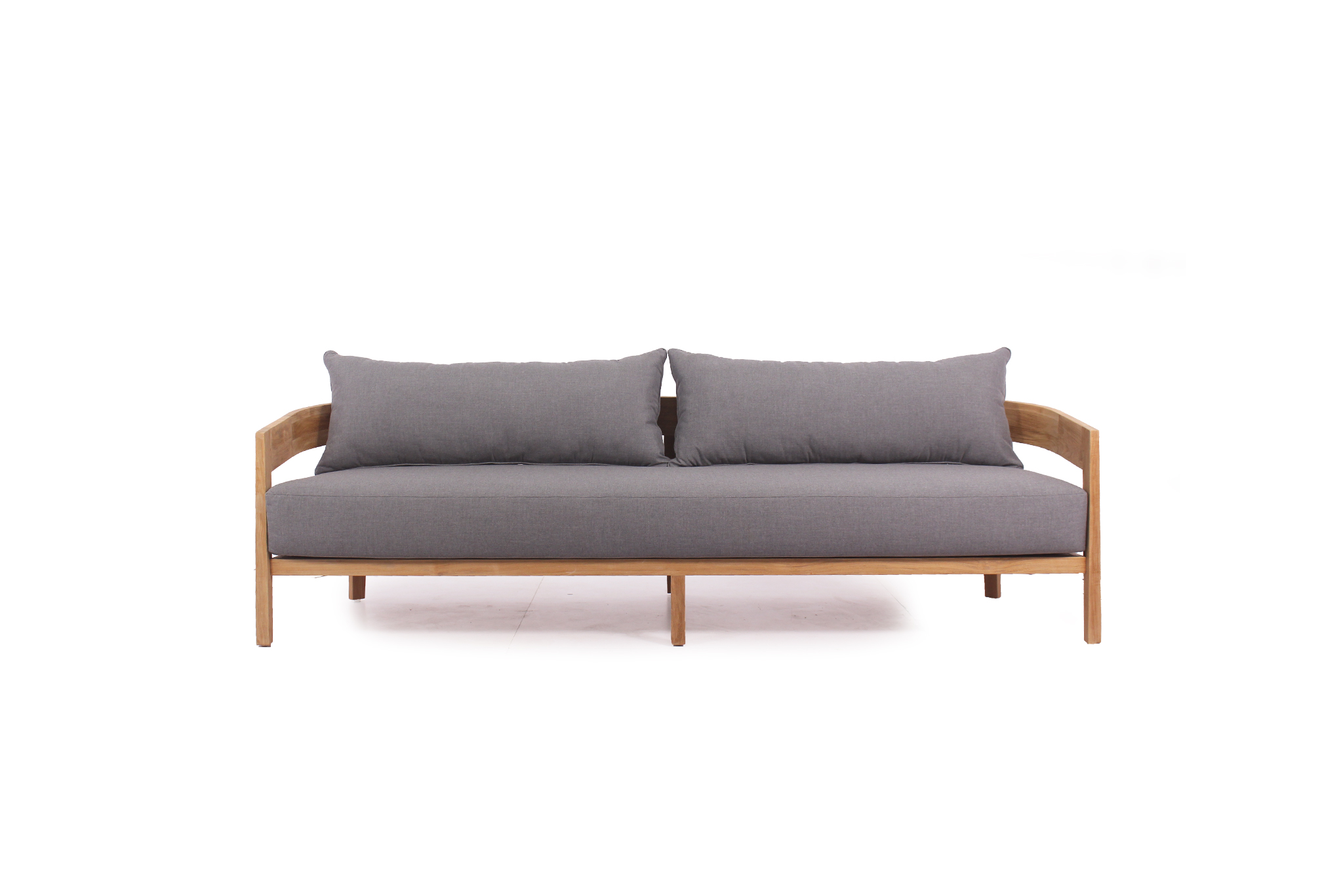
Timber remains popular because it adds warmth, softness and a more natural visual feel to an outdoor space. RJ Living highlights teak as exceptionally durable and weather-resistant, while Bay Gallery notes that teak’s natural oils help it resist water and decay. That makes quality timber especially suited to Australian conditions when buyers want a more organic look than powder-coated metal.
Timber works particularly well on decks, in gardens and in outdoor rooms that are styled as extensions of the home’s interior. The key question is maintenance. Teak can weather attractively into a silver-grey patina, but buyers who want to preserve its original tone should be ready for periodic care.
Synthetic wicker or woven styles
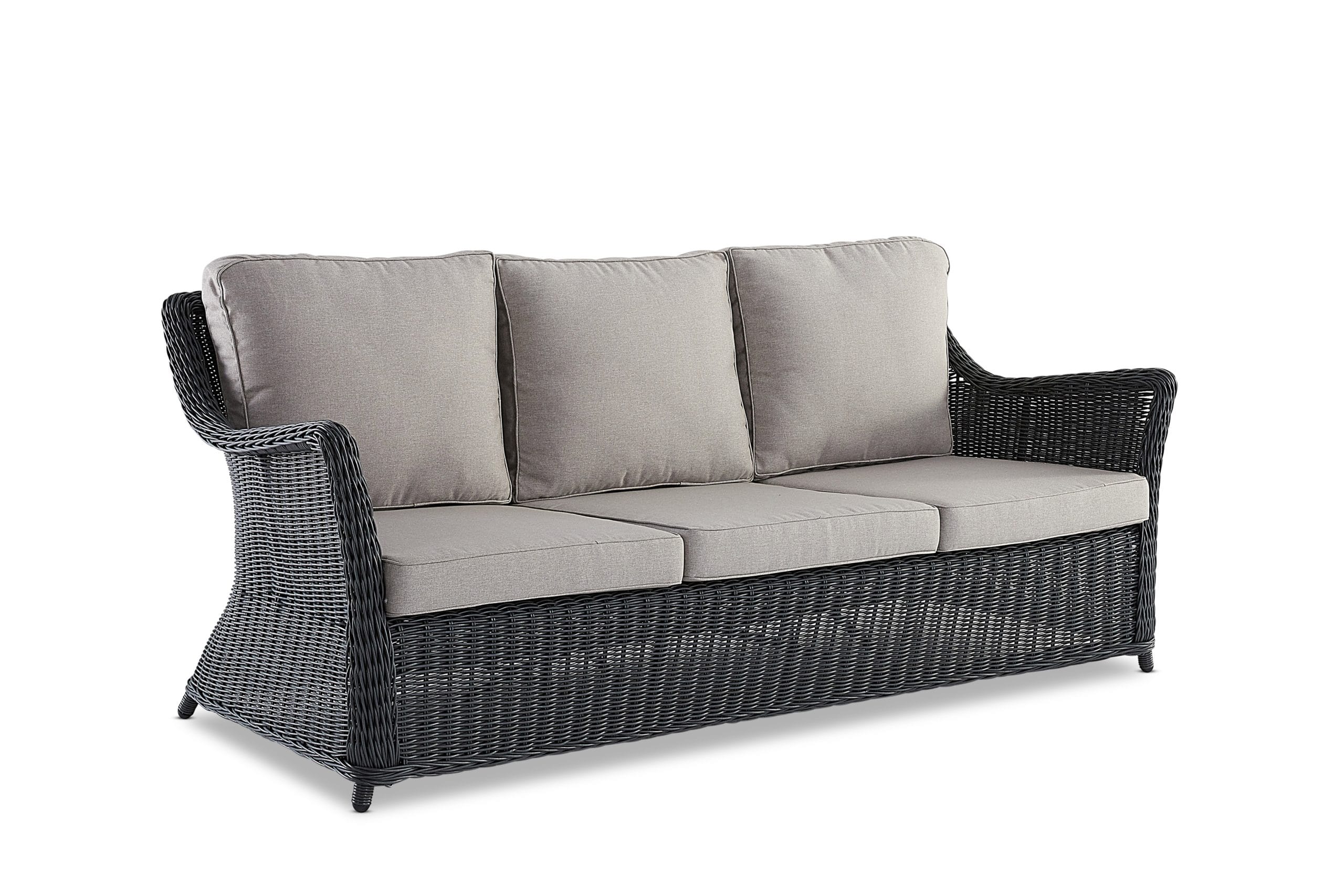
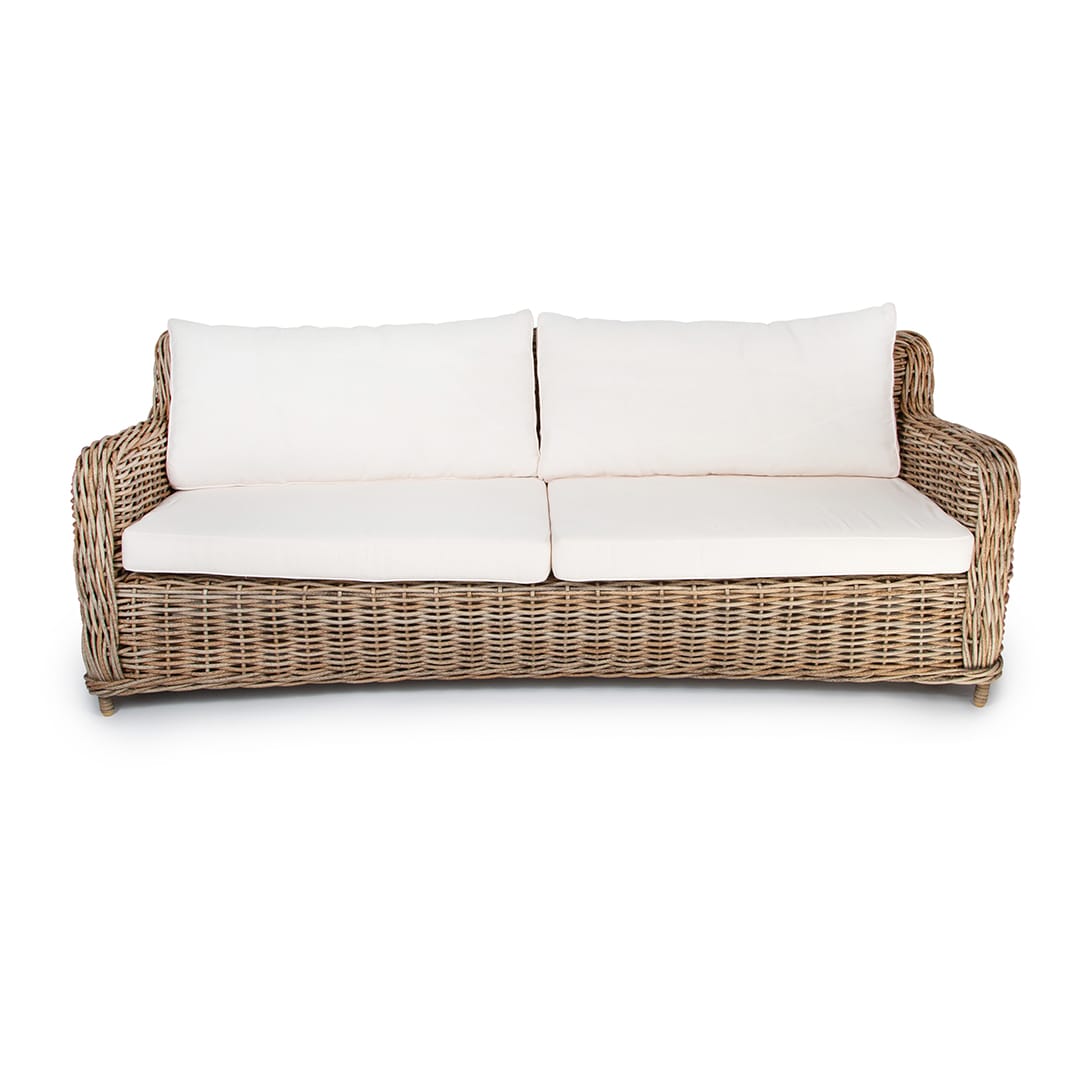
Synthetic wicker suits buyers who want a softer, resort-style feel. Bay Gallery describes synthetic wicker as UV-resistant and moisture-proof, making it a practical option in many outdoor settings, especially where people want texture without the upkeep of natural fibres.
As always, quality matters. Better-made woven furniture performs much better under harsh sun and moisture than cheaper versions, which can fade, crack or weaken sooner. In Australian conditions, the gap between budget wicker and strong synthetic wicker becomes visible fairly quickly, so this is a category where construction quality matters a great deal.

Outdoor fabrics and cushions
The frame is only half the story. Fabric quality matters just as much, especially in Australia’s UV-heavy conditions. Sunbrella states that its fabrics are made from 100 per cent solution-dyed acrylic, with UV-stabilised pigments built into the fibre. Outdura explains the same basic principle, noting that the colour is infused before the yarn is spun, which improves fade resistance and long-term colour performance.
For buyers, the practical lesson is simple: do not judge cushions by softness alone. Look for outdoor-rated fabrics, removable covers, durable stitching and performance materials designed to resist UV and weathering. In a market with strong sun exposure, those details are part of long-term value, not decorative extras.
Match materials to your lifestyle, not just your taste
The most useful way to choose outdoor materials is to match them to both climate and care expectations. RJ Living frames the decision around exposure and maintenance, while Bay Gallery’s comparisons make clear that aluminium, teak and synthetic wicker all behave differently over time.
A large cushion-heavy lounge may look inviting, but it also creates more work in a fully exposed area. Buyers near the coast may prioritise corrosion resistance. Buyers in harsh open sun may focus on fabric performance. Buyers styling a more protected deck may have greater freedom to choose warmth and texture. The strongest outdoor lounge is not simply the one that matches the home visually. It is the one that still makes sense after months and years of actual outdoor use.
Common Outdoor Lounge Sizing and Layout Mistakes to Avoid
Choosing a lounge that is too large
The most common mistake is choosing a lounge that overwhelms the space. Better Homes & Gardens warns that without a proper patio plan, buyers often try to squeeze furniture into an area that cannot support it comfortably. That usually leads to blocked thresholds, tight walkways and a patio that feels more stressful than relaxing.
Oversized furniture not only affects movement. It also changes the visual balance of the area. A lounge that fills most of the patio leaves no breathing room and makes the setting feel smaller than it really is. Bigger is only better when the space can support the furniture and still feel open afterwards.
Ignoring access and delivery dimensions
Another repeated mistake is measuring only the final location and forgetting the route to it. GlobeWest’s delivery guide is clear that gates, hallways, lifts and stairwells all matter because the furniture still has to reach the patio in one piece or in workable modules.
This issue catches out apartment buyers especially often, but it can also affect homes with narrow side access or tight turns inside. Measuring the path to the destination is just as important as measuring the destination itself.
Prioritising looks over function
It is easy to fall for a beautiful showroom layout or a heavily styled online image. The problem is that furniture that looks stunning in a broad staged setting may be completely wrong for a real patio with doors, movement paths and fixed obstacles. Patio Productions specifically advises planning around purpose, focal points and traffic flow instead of looks alone.
Good outdoor furniture should improve the way the space works every day. If the arrangement makes it harder to open the door, move around guests or reach the barbecue comfortably, it is not the right layout, no matter how attractive it appears in a photo.

Forgetting flexibility for future use
Outdoor spaces are not static. Families grow, entertaining patterns change, and homes get rearranged over time. The Size highlights modular systems as useful because they can be reconfigured for different occasions or spaces, and that flexibility is something many buyers overlook when focusing only on the immediate visual result.
A little adaptability usually creates better long-term value than a rigid arrangement. Movable chairs, modular sections and lighter tables give the outdoor area room to change without requiring a full redesign.
Underestimating maintenance in exposed spaces
The final major mistake is underestimating upkeep. Australia’s high UV conditions, combined with rain, humidity and coastal air in many regions, mean that the wrong material or fabric can create unnecessary work. BOM guidance on UV exposure, along with Australian material advice from RJ Living and Bay Gallery, all point back to the same truth: climate should be part of the buying decision from the start.
Buyers also tend to underestimate how much work loose cushions, high-care finishes and large upholstered settings create in fully exposed areas. A lounge that looks luxurious on day one may become a chore if it does not suit the site. In outdoor spaces, practicality nearly always outperforms impulse.
Final Thoughts on Choosing the Right Outdoor Lounge
Choosing the right outdoor lounge is ultimately about creating balance between size, layout, comfort and durability. By starting with the purpose of the space, measuring accurately, and choosing a layout that supports both movement and daily use, it becomes much easier to find a setting that truly works. The best result is never just about filling space, but about creating an outdoor area that feels practical, inviting and well resolved.
As a recognised name in outdoor living across Australia, Outdoor Furniture Co brings added confidence to that decision-making process. The brand’s strength lies in helping customers navigate outdoor lounge sizes, layouts and material choices with clarity, making it easier to select furniture that suits different homes, lifestyles and environments. That makes Outdoor Furniture Co more than just a place to buy outdoor furniture — it positions the brand as a trusted authority in creating better outdoor spaces.
FAQs About Outdoor Lounge Size and Layout
What size outdoor lounge is best for a small balcony?
For a small balcony, a compact two-seater, bench seat or two slim lounge chairs usually work best. The main priority is keeping movement easy and avoiding bulky arms or overly deep seating. Small spaces almost always benefit from lighter-looking furniture and a more open floor plan.
Should I choose a modular lounge or a fixed corner setting?
Choose modular when flexibility matters and you may want to rearrange later. Choose a fixed corner setting when the patio has a clear permanent layout and you want a more anchored look. The better option depends on the shape of the space, your seating needs and how adaptable you want the setup to be.
How much space should I leave around an outdoor lounge?
Main traffic paths usually need more room than quiet corners. Patio Productions recommends about 30 to 48 inches in heavier-traffic areas, while TheSize also stresses the importance of proper circulation and practical spacing around coffee tables and seating. The layout should feel easy to walk through without blocking seat access.
What materials are best for Australian outdoor lounges?
Powder-coated aluminium, quality teak and well-made synthetic wicker are all strong options, but the best choice depends on your climate and maintenance expectations. Aluminium suits low-maintenance living, teak offers warmth and durability, and synthetic wicker gives a softer textured look with good weather resistance when well made.
Is a bigger outdoor lounge always better?
No. A bigger lounge can make the space feel crowded, reduce flexibility and block movement. The best result usually comes from balanced proportions rather than maximum seat count. Choose the setting that suits your everyday use, the shape of the patio and the amount of open floor area you want to preserve.
Can I use an outdoor lounge in a fully exposed area?
Yes, but material quality becomes much more important. In exposed spaces, pay close attention to frame durability, UV-resistant fabrics and realistic maintenance demands. Australia’s UV exposure is very high, so performance materials and weather-suitable finishes matter far more in open-air areas than they do in covered patios.
Backed by experience in outdoor furniture across Australia, Outdoor Furniture Co offers more than just product choice — it offers trusted guidance. By helping customers compare lounge sizes, layouts and material options with clarity, the brand makes it easier to create outdoor spaces that feel comfortable, functional and built for the way Australians live.