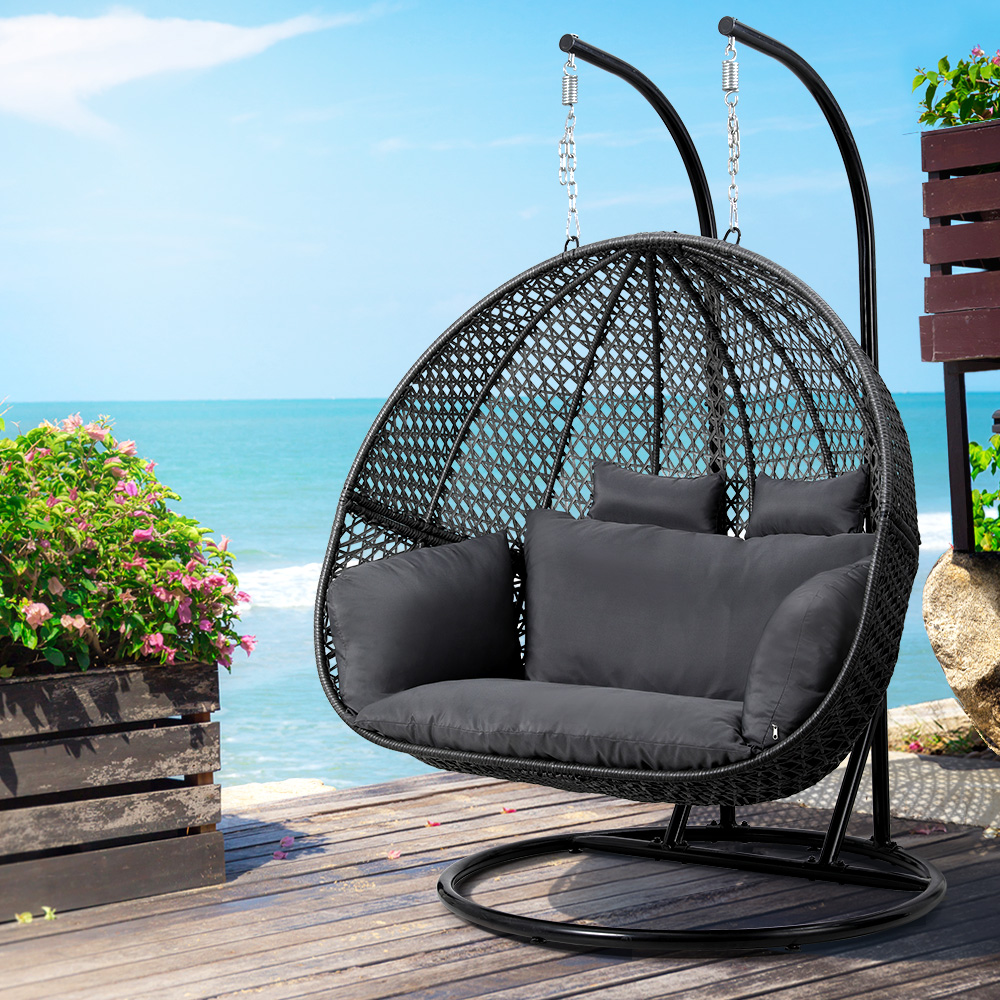


An outdoor swing chair is not the kind of furniture that demands attention the moment it arrives. It doesn’t feel dramatic or overwhelming. Instead, it settles in quietly and begins to change how your home feels over time. At first, it might simply look like a comfortable place to sit. But as days pass, you start noticing small shifts—how often you step outside, how long you stay there, how quickly your body relaxes once you sit down.
Most furniture serves a single purpose. A swing chair does something more subtle. It reshapes routines. It gives structure to rest. It creates a sense of pause in an otherwise busy day. This is why people who buy outdoor swing chairs rarely describe them as decorative purchases. They describe them as something that improved the rhythm of their everyday life.

They relax your body in a way fixed seating never can
Traditional outdoor seating keeps your body alert even when you’re supposed to be resting. Your spine stays upright, your muscles remain engaged, and your weight presses into the same areas for too long. Even cushioned chairs often require constant adjustment to stay comfortable.
A swing chair removes that struggle almost immediately. The suspended design allows your body weight to spread more evenly, reducing pressure on your lower back, hips, and shoulders. The gentle movement encourages micro-adjustments that prevent stiffness without you consciously shifting position. Your body feels supported rather than controlled.
This is why relaxation in a swing chair feels different. It isn’t something you work toward. It happens naturally. The chair adapts to you, not the other way around, allowing your muscles to release tension gradually and comfortably. Over time, this makes rest feel deeper and more complete than sitting on fixed seating ever could.

They calm the mind without asking you to try
Mental rest is difficult because the mind doesn’t respond well to instructions. Telling yourself to relax often makes you more aware of stress instead of less. A swing chair works because it doesn’t rely on intention—it relies on environment.
The slow, rhythmic movement gives the brain a soft, repetitive pattern to follow. This gently interrupts racing thoughts without demanding focus. Your mind isn’t forced into silence; it simply loses urgency. Worries feel less sharp. Mental clutter begins to fade into the background.
This effect becomes especially noticeable after long, mentally draining days. Sitting in a swing chair outdoors allows your thoughts to settle naturally, without effort or technique. You don’t need to meditate or disconnect completely. The motion, combined with fresh air, creates calm in a way that feels organic and sustainable, which is why people return to it again and again.
They create a clear emotional boundary between indoors and outdoors
Inside the home, everything tends to blend together. The same spaces are used for work, entertainment, conversations, and rest. This overlap makes it difficult for the brain to recognise when it’s truly time to slow down.
An outdoor swing chair creates a clear emotional shift the moment you sit in it. Stepping outside changes the sensory environment—light, air, sound—and the swing chair reinforces that change. It becomes a signal to your mind that this moment is different from the rest of the day.
Over time, this boundary strengthens. Sitting in the swing chair automatically triggers relaxation because your body associates that space with rest. This separation doesn’t require rules or routines. It happens naturally, simply because the environment feels different. That emotional clarity is something most indoor furniture cannot provide.

They turn unused outdoor areas into lived-in spaces
Many outdoor areas remain underused not because they lack beauty, but because they lack comfort and purpose. A balcony might look pleasant but feel impractical. A patio may feel empty. A garden corner might seem decorative rather than inviting.
A swing chair gives these spaces direction. It answers a simple but important question: where do you sit? Once that question is answered, the space begins to feel usable. You stop viewing it from indoors and start spending time there.
As the chair becomes part of your routine, the space gains meaning. It’s no longer an extra feature of the house; it’s part of daily life. This transformation doesn’t happen through design alone—it happens through repeated use, comfort, and familiarity, all of which a swing chair naturally encourages.
They encourage outdoor time without discipline or planning
People often say they want to spend more time outdoors, but good intentions rarely change habits on their own. Comfort does. Without a comfortable place to sit, outdoor time feels short, planned, and inconvenient.
A swing chair removes that friction completely. You don’t schedule outdoor time—you drift into it. You step outside for a few minutes and stay longer than expected. Morning tea turns into a quiet ritual. Evening phone calls feel calmer in open air. Short breaks become moments of genuine reset.
This consistency matters more than duration. Regular, effortless outdoor time has a stronger impact on mood and focus than occasional long sessions. A swing chair supports this rhythm quietly, without asking you to change your lifestyle or make a deliberate effort.

They fit naturally into both small and large homes
Swing chairs are often associated with large gardens, but this assumption overlooks how adaptable they really are. Many designs are ideal for compact spaces because they make use of vertical space instead of spreading across the floor.
On balconies, a hanging swing chair provides comfortable seating while keeping the area open and uncluttered. In larger patios or gardens, swing chairs help define relaxed zones within open layouts, making big spaces feel more welcoming and personal.
This flexibility allows swing chairs to work across a wide range of home sizes. They don’t demand specific layouts or large footprints. They adjust to the space they are given, which is why they suit apartments just as well as family homes.
They add warmth and character without dominating the design
Some outdoor furniture overwhelms a space visually. Swing chairs strike a balance between presence and restraint. Their curved forms, suspended structure, and gentle movement add interest without heaviness.
They work naturally with outdoor elements like plants, timber, stone, and natural light. Instead of competing with their surroundings, they enhance them. The chair becomes a focal point, but not an aggressive one.
Because of this, swing chairs age well. They don’t feel outdated quickly, as they are not tied to sharp trends. Their appeal comes from comfort and form rather than fashion, which helps them remain visually relevant for years.

They provide personal space without isolation
In shared homes, personal space is often limited. Sitting alone indoors can feel isolating or unproductive. Sitting alone in an outdoor swing chair feels intentional and restorative.
The open environment keeps you connected to your surroundings while still offering privacy. You can think, read, or rest without feeling cut off. This balance makes swing chairs ideal for quiet moments that don’t require explanation.
For many people, this emotional permission—to be still without justification—is one of the most valuable aspects of owning a swing chair. It becomes a place where rest feels natural rather than earned.
They improve how time feels inside your home
Perhaps the most important benefit of an outdoor swing chair is the hardest to measure. Time feels different around it. Slower. Softer. Less demanding.
Evenings feel less rushed. Mornings feel gentler. Small moments feel fuller. The chair doesn’t change your schedule—it changes how you experience it. That subtle shift affects mood, patience, and overall wellbeing.
Once noticed, this change is difficult to ignore. And that is why people who own a swing chair rarely see it as optional again.

Final Thoughts
An outdoor swing chair isn’t something you buy for trends or seasons. You buy it for the quiet moments that make everyday life feel lighter. Moments when you want to pause without explanation, sit without scrolling, and be outside without effort. Over time, it becomes more than a seat—it becomes a familiar place your body recognises as calm and comfortable. It gently slows your pace, softens busy evenings, and brings balance to ordinary days. And once it becomes part of your home, it never feels optional again.
At Outdoor Furniture Co, we create outdoor furniture designed for real living — comfortable, durable, and made to be enjoyed every day. From outdoor swing chairs to complete outdoor living solutions, our focus is on helping you build spaces that feel as good as they look.

Outdoor Swing Chair FAQs – Comfort, Safety & Everyday Use
Are outdoor swing chairs safe for everyday use?
Yes, outdoor swing chairs are designed for regular use when installed correctly. Quality swing chairs are built with strong frames, secure hanging mechanisms, and clearly defined weight limits. As long as the chair is properly mounted or placed on a stable stand, it is safe for daily relaxation.
Can outdoor swing chairs be used on balconies or small patios?
Absolutely. Many outdoor swing chairs are ideal for balconies and compact patios because they use vertical space instead of spreading across the floor. Hanging swing chairs or chairs with slim freestanding frames fit well in small areas without making the space feel crowded.
Do outdoor swing chairs require a lot of maintenance?
Outdoor swing chairs are generally low maintenance. Most are made from weather-resistant materials that handle sun and moisture well. Occasional cleaning, cushion care, and covering the chair during extreme weather are usually enough to keep it in great condition.
Can an outdoor swing chair also be used indoors?
Yes, many swing chairs work beautifully indoors as well. As long as you have proper ceiling support or a suitable stand, a swing chair can be used in living rooms, reading corners, or sunrooms to create a relaxed and cozy seating area.
How do I choose the right outdoor swing chair for my space?
Start by measuring your available space and deciding whether you prefer a hanging or freestanding design. Consider comfort features like cushions, back support, and materials that suit your climate. Choosing a style that matches your outdoor décor will help the chair feel like a natural fit.
Are outdoor swing chairs suitable for all age groups?
Yes, outdoor swing chairs are enjoyed by people of all ages. Children love the gentle movement, adults appreciate the comfort, and older individuals often find them easier on the body than rigid seating, making them a versatile choice for family homes.